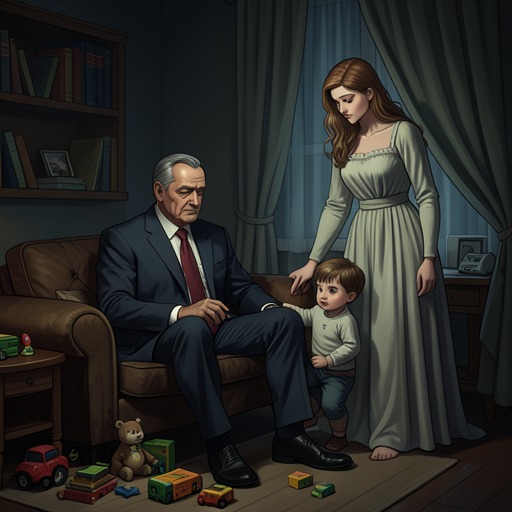
Shen Tang and Gu Anran and Gu Wuyang
I’m Very Happy After Marrying the CEO Husband According to the AgreementShen Tang and Gu Anran and Gu Wuyang are connected through Shen Tang’s marriage and growing intimacy with Gu Huaian, but their relationship is defined less by formal family labels than by everyday care and negotiated trust. Shen Tang becomes an adult figure who can guide the two children without trying to control them, while Anran and Wuyang respond to her with confidence, affection, and a willingness to share her public world. Their bond is especially important because it turns the children from background members of Gu Huaian’s household into active participants in Shen Tang’s evolving family life.
Place Within the Family
Shen Tang’s relationship with Gu Anran and Gu Wuyang emerges within a household where family ties are not limited to simple blood or legal categories. Shen Tang’s marriage to Gu Huaian gives her access to the children’s domestic world, yet her conduct toward them is not presented as a performance of authority. Instead, she approaches them through conversation, games, and practical decisions, allowing intimacy to form through repeated participation rather than demanding immediate obedience.
This approach contrasts with the more transactional pressures surrounding Shen Tang elsewhere in the story. Her entertainment career requires her to endure rumors, hostile publicity, and the company’s efforts to pair her with male celebrities for attention. Even during livestreams, she maintains a professional smile while viewers criticize her, converting emotional strain into income. Against that background, her interactions with Anran and Wuyang create a different kind of public and private role: she is still visible, but the children are not merely tools for her image. Their relationship is grounded in care and mutual willingness.
Trust, Choice, and Boundaries
The clearest expression of this trust comes when Shen Tang asks whether Anran and Wuyang want to participate in the children’s variety program. Gu Huaian’s arrangements are nearing completion, but Shen Tang does not simply decide on the children’s behalf. She asks them directly, and the two look at each other before eagerly agreeing. She also warns them that public participation may bring unpleasant situations and comments, giving them information before they commit rather than concealing the risks behind the excitement of television.
Gu Anran responds that other people may say whatever they want because those words come from their own mouths. Gu Wuyang answers with the confidence of a small adult, insisting that he will become the most popular child and challenging Shen Tang’s confidence in him. Shen Tang encourages that self-assurance instead of mocking it or replacing it with her own judgment. The exchange establishes a reciprocal structure: Shen Tang supplies protection and preparation, while the children retain the right to choose and to define how they will face an audience.
Their boundaries also appear in Shen Tang’s response to Xie Xuan’s wish to accompany her. Shen Tang tells Xie Xuan that permission from her brother is still needed and that work may leave little time for games. Although this moment concerns another child, it clarifies Shen Tang’s general ethic around children: affection does not erase permission, family responsibility, or practical limits. Her bond with Anran and Wuyang is therefore caring without becoming possessive.
Games and Shared Social Worlds
Play is one of the main channels through which Shen Tang builds relationships with younger people. Miao Miao invites her to play King of Glory after Shen Tang has gone several days without gaming. When Shen Tang logs in, she discovers that Gu Huaian is already online and has reached the King rank, and she is pulled into his room before creating one herself. Elsewhere, game matchmaking places her with two girls who specialize in mage and support roles and a boy who has several jungler heroes; his immediate scolding identifies him as male before any other information does.
These gaming scenes show how play can expose social behavior quickly. Rank, role assignment, assistance, insults, and team cooperation become tests of character and gendered assumptions. Shen Tang can be irritated when a jungler refuses to help her lane after she falls behind, yet gaming also creates informal routes into friendship and family intimacy. For Anran and Wuyang, the wider significance is that Shen Tang meets younger companions through shared activity rather than treating childhood as a passive state. Her connection with them belongs to the same practical world of participation, learning, and playful competition.
Preparing for the Variety Program
Once Anran and Wuyang agree to participate, Shen Tang and Gu Huaian’s arrangements move toward filming. The children have watched earlier episodes and already understand much of the program’s format, which makes them intensely excited. When the filming date finally arrives, the crew comes unusually early, at five in the morning, because the production intends to create an immediate situation rather than wait for the household to prepare conventionally.
Shen Tang and the children had agreed beforehand to behave naturally, so the crew finds them still asleep when it arrives. Later, Anran and Wuyang appear in matching outfits, standing together like toy dolls, and their appearance immediately attracts delighted audience reactions. The visual appeal produces attention, but Shen Tang’s conduct gives the scene its substance. She does not intervene in every task, nor does she lie motionless and let the children do whatever they want. Instead, she selectively asks them to act for themselves, including packing their own luggage, so that the experience can build practical ability.
The trip therefore becomes more than a television appearance. Shen Tang’s method combines supervision with withdrawal: she remains responsible for the children’s safety and the overall process, but she does not remove every difficulty from their path. The result is smooth participation on her side, with the two children’s charm attracting many auntie fans while their own actions remain visible. Their appeal is not only that they look cute; it is also that they are being allowed to learn, decide, and perform competence.
Development and Significance
The relationship’s development reflects Shen Tang’s broader movement away from isolation and toward chosen, lived family connections. She once considered leaving entertainment altogether, partly because she was burdened by scandal and partly because her savings had been consumed by the needs of children from the orphanage, including an eight-year-old boy with leukemia. Her professional smile, cautiousness on set, and willingness to endure hostile viewers all show how much labor she spends protecting others while surviving public judgment. With Anran and Wuyang, that protective instinct becomes more balanced: she cares for them, but she also trusts them.
Anran and Wuyang consequently function as more than symbols of Gu Huaian’s family. They are participants in Shen Tang’s transition from contractual association to emotional belonging. Their eagerness to join the show, their confidence in facing criticism, their matching clothes, and their independent packing all make the relationship visible through actions rather than declarations. Shen Tang’s significance to them lies in her ability to make room for their agency; their significance to her lies in the family warmth and responsibility that grow from that room. Together, they represent a form of family created through consent, care, and shared experience rather than imposed solely by status.